Cart
1

Quick Summary
To plan post workout meals without protein powder, pick a whole-food protein and a carbohydrate source, then scale portions to your body weight and session type. A practical target is about 0.3 to 0.4 grams of protein per kilogram of body weight, paired with carbs matched to how hard you trained.
- Aim for about 0.3 to 0.4 grams of protein per kilogram of body weight after training.
- Scale carbohydrates to session length: 0.5 to 1.0 grams per kilogram for light sessions.
- Use the 3-step method: pick two proteins, two carbs, and prep them weekly.
- Choose whole foods like eggs, chicken, salmon, lentils, or Greek yogurt for protein.
- Total daily intake matters more than eating within 30 minutes of training.
Table of Contents
- Why Post-Workout Meals Work Without Protein Powder
- Protein and Carb Targets by Body Weight and Workout Type
- High-Protein Post-Workout Meals Built from Whole Foods
- Whole-Food Protein Sources After a Workout
- Vegetarian Post-Workout Meals and Plant Protein Swaps
- How Post-Workout Meal Timing Works and How Flexible It Is
- Building Your Weekly Post-Workout Meal Plan
- Your Next Step: Set Up a Two-Week Trial Plan
- Frequently Asked Questions
Why Post-Workout Meals Work Without Protein Powder
Last Updated: November 1, 2026
Protein powder is convenient, but it is not required for recovery, and simple post workout meals can cover your needs just as well.
A post-workout meal is simply a real meal eaten after training. It gives your muscles protein to repair and carbohydrates to refill energy. Protein powder is one way to deliver those nutrients.
Here is the core idea. You do not need a shake to recover. You need enough protein, enough carbs, and a meal you actually enjoy eating.
- Whole foods deliver protein plus vitamins, minerals, and fiber
- Meals feel more satisfying and keep you full longer
- Cooking a meal can fit into a busy week more easily than a daily shake
Most people overcomplicate this. The goal is a simple, repeatable meal, not a perfect one.
Protein and Carb Targets by Body Weight and Workout Type
Most post-workout advice stops at "eat protein and carbs." A more useful approach is to scale portions to your body weight and the type of session you just finished. You do not need a supplement to do this, you just need a rough target and a kitchen scale or measuring cups.
Protein: a body-weight starting point
For a post-workout meal, a practical target is about 0.3 to 0.4 grams of protein per kilogram of body weight (about 0.14 to 0.18 grams per pound), enough to stimulate muscle repair without forcing an oversized meal.
| Body weight | Daily protein range (1.4-2.0 g/kg) | Post-workout meal target (0.3-0.4 g/kg) |
|---|---|---|
| 60 kg (132 lb) | 84-120 g | 18-24 g |
| 75 kg (165 lb) | 105-150 g | 23-30 g |
| 90 kg (198 lb) | 126-180 g | 27-36 g |
| 105 kg (231 lb) | 147-210 g | 32-42 g |
These are starting points, not prescriptions. Older adults and people in a calorie deficit may benefit from the higher end; people with kidney conditions should check with a clinician before increasing protein.
Carbohydrates: match the session, not the clock
Carbohydrate needs track with how much glycogen you burned. A simple way to set the post-workout portion:
- Short or light session (under 45 minutes, low intensity): 0.5-1.0 g of carbohydrate per kg of body weight (e.g., 35-75 g for a 75 kg person), about one fist-sized serving of rice, potato, or bread.
- Moderate strength or steady cardio (45-75 minutes): 1.0-1.5 g/kg (75-110 g for 75 kg), one to two fist-sized servings.
- Long or hard endurance session (75+ minutes, or two-a-days): 1.5-2.0 g/kg (110-150 g for 75 kg), two to three fist-sized servings, plus a piece of fruit.
Putting the two together
A 75 kg person after a moderate strength session might target 23-30 g of protein and 75-110 g of carbs. In whole-food terms that is roughly:
- 120 g cooked chicken breast (about 35 g protein) plus 1.5 cups cooked rice (about 65 g carbs), or
- 3 eggs plus 2 slices whole-grain toast and a banana (about 24 g protein, 70 g carbs), or
- 200 g plain Greek yogurt with 1/2 cup oats and berries (about 22 g protein, 55 g carbs).
If you train fasted or ate very little before your session, lean toward the higher end of both ranges. If you ate a full meal within two hours before training, you can stay at the lower end and still recover well.
These targets are for general healthy adults. If you have a health condition, are pregnant, or are managing a clinical diet, work with a registered dietitian to set individual numbers.
Workout type changes the ratio, not just the amount
- Strength training: keep protein at the higher end of the meal target and carbs moderate. Muscle repair is the priority.
- Endurance training: push carbs to the higher end and keep protein at the lower end. Refilling glycogen is the priority.
- Mixed or high-intensity interval training: split the difference, mid-range protein and mid-range carbs, because you are repairing muscle and refilling glycogen at the same time.
The key is to pick a target, eat a real meal that roughly matches it, and adjust based on energy and recovery over one to two weeks. Precision matters less than consistency.
High-Protein Post-Workout Meals Built from Whole Foods
A good post-workout meal has three parts: a protein source, a carbohydrate, and some vegetables or fat for fullness. You can mix and match these parts easily.
Some simple combinations:
- Grilled chicken, brown rice, and roasted broccoli
- Scrambled eggs, whole-grain toast, and sautéed spinach
- Salmon, sweet potato, and a green salad
- Greek yogurt bowl with oats, berries, and nuts
- Lean beef stir-fry with rice and peppers
Each of these takes about 20 to 30 minutes to make. Batch cooking the protein and grain on Sunday makes weekday meals faster.
Whole-Food Protein Sources After a Workout
Protein comes from both animal and plant foods. Choosing a mix keeps meals varied and affordable.
Animal-based options:
- Chicken breast and thighs
- Eggs and egg whites
- Fish such as salmon, tuna, or cod
Plant-based options:
- Lentils, chickpeas, and black beans
- Tofu and tempeh
- Edamame
Some foods, like Greek yogurt and eggs, are easy to add to breakfast or a snack. Canned tuna and beans are budget-friendly and last a long time in the pantry.
Vegetarian Post-Workout Meals and Plant Protein Swaps
Vegetarian recovery meals work well. Learn how to verify supplement quality and purity if you add supplements alongside whole foods. The main difference is that plant proteins often come packaged with more fiber and fewer calories per gram, so portions may need to be larger.
Try these plant-based swaps:
- Replace chicken with tofu or tempeh in a stir-fry
- Use lentils in place of ground beef in tacos or chili
- Top a grain bowl with chickpeas and a tahini dressing
A common mistake is building a meal around pasta or bread alone and calling it done. Always add a clear protein source, even a small one.
How Post-Workout Meal Timing Works and How Flexible It Is
The old idea that you must eat within 30 minutes of training is outdated. Your total intake across the day matters more than the exact minute you eat.
That said, eating a meal within a few hours after training is a practical goal for most people.
If you are not hungry right after a hard session, wait. A snack or meal within a few hours is still a good plan.
Building Your Weekly Post-Workout Meal Plan
A weekly plan works best when it is built around a repeatable method, not a rigid menu. Find guidance on balancing fitness with professional life to fit meal prep into a busy schedule. The method below lets you plan post-workout meals without protein powder, adapt to your schedule, and swap foods for your diet or budget.
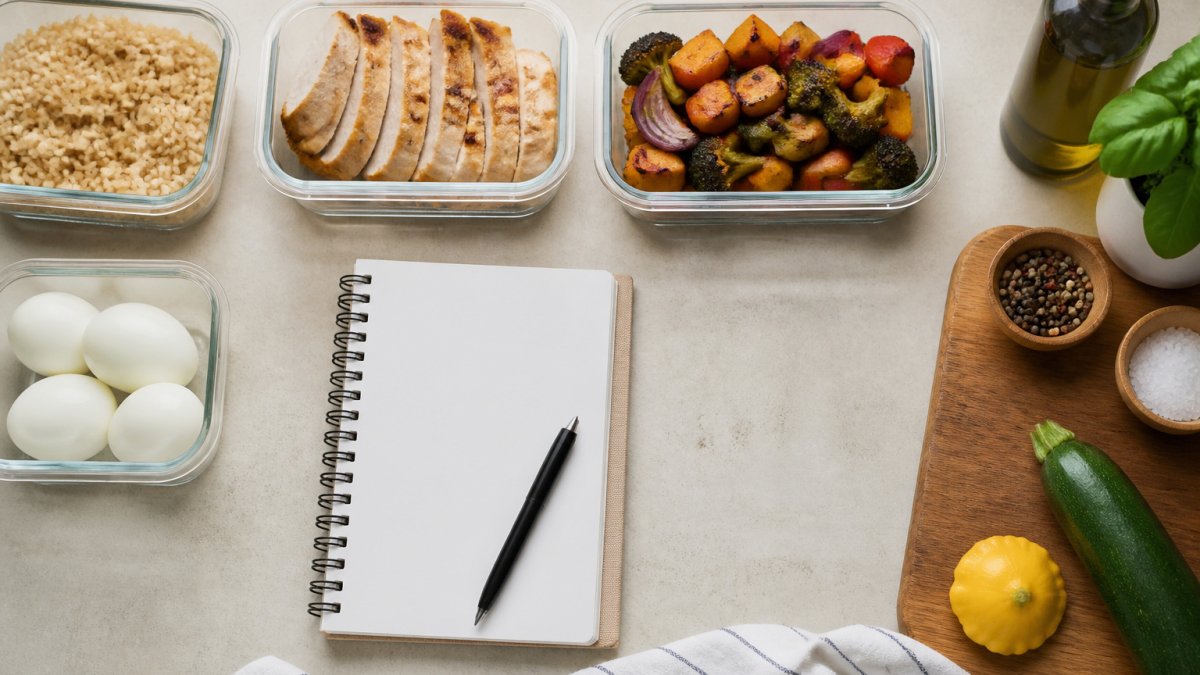
The 3-step planning method
- Pick two proteins and two carbs for the week. Choose one animal or plant protein you can cook in bulk and one that needs little prep (e.g., chicken + eggs, or tofu + lentils). Do the same for carbs (e.g., rice + potatoes, or oats + whole-grain bread).
- Map meals to your training schedule. Put the largest post-workout meal after your hardest session. Put quicker meals after light sessions. If you train in the morning, plan a breakfast-style recovery meal; if you train at night, plan a dinner-style one.
- Prep one protein and one carb on the weekend. Cook a batch of the protein and a batch of the carb, store them in the fridge for up to four days, and freeze what you will not eat by then. Reheat until steaming hot.
Complete meal templates with portions and estimates
Use these as starting points. Estimates are approximate and will vary by brand and preparation.
| Template | Example plate | Protein (approx.) | Carbs (approx.) | Calories (approx.) |
|---|---|---|---|---|
| Chicken and rice bowl | 120 g cooked chicken breast, 1.5 cups cooked brown rice, 1 cup roasted broccoli, 1 tsp olive oil | 35 g | 65 g | 550-600 |
| Egg and toast plate | 3 large eggs, 2 slices whole-grain toast, 1 cup sautéed spinach, 1 small orange | 24 g | 55 g | 450-500 |
| Salmon and sweet potato | 120 g baked salmon, 1 medium sweet potato, 2 cups mixed greens with vinaigrette | 28 g | 45 g | 500-550 |
| Greek yogurt bowl | 200 g plain Greek yogurt, 1/2 cup rolled oats, 1 cup berries, 15 g nuts | 22 g | 55 g | 400-450 |
| Lentil and tofu bowl | 1 cup cooked lentils, 150 g firm tofu, 1 cup cooked quinoa, 1 cup roasted vegetables | 30 g | 70 g | 550-600 |
| Beef stir-fry | 100 g lean beef strips, 1.5 cups cooked rice, 2 cups stir-fry vegetables, 1 tbsp oil | 28 g | 70 g | 550-600 |
Sample week for a 75 kg person training four times
- Monday (strength, evening): chicken and rice bowl after training; leftovers for Tuesday lunch.
- Tuesday (rest): egg and toast plate for breakfast; no special post-workout meal needed.
- Wednesday (endurance, morning): Greek yogurt bowl within two hours of finishing; lentil and tofu bowl for dinner.
Substitutions for diets, allergies, and budgets
- Vegetarian: swap chicken for tofu, tempeh, or paneer; swap beef for lentils or beans. Add a handful of nuts or seeds if protein is low.
- Vegan: use tofu, tempeh, lentils, chickpeas, or edamame; choose plant yogurt fortified with protein; pair with whole grains for complete amino acids.
- Dairy-free: replace Greek yogurt with soy or pea-protein yogurt, or use eggs and fish if you eat them.
The plan is a template, not a rulebook. Pick the two proteins and two carbs you will actually cook, match the portion to your body weight and session, and prep one batch on the weekend. That is enough to recover without a shake.
Food safety and storage
Cooked protein and grains keep in the fridge for three to four days. Practical stress-management steps can help you stay consistent during a demanding week. Freeze portions you will not eat by then, and reheat to steaming hot. Keep raw and cooked foods separate, and cool leftovers quickly before refrigerating.
Your Next Step: Set Up a Two-Week Trial Plan
Start small. Choose two protein sources and two carbs you already like. Plan five post-workout meals, cook them in batches, and track how you feel after two weeks.
Notice your energy, recovery, and how satisfied you feel. Adjust portions or swap foods as needed. You do not need a shake to get results. Visit the Calmpulseco website for current product information when you want support for your routine.
Frequently Asked Questions
Can I make a post-workout meal without protein powder and still get enough protein?
Yes. Whole foods such as eggs, Greek yogurt, chicken, fish, lentils, tofu and beans can supply the protein most people need after training. A practical starting point is roughly 20 to 40 grams of protein in the meal, paired with carbohydrates to help refuel glycogen. Protein powder is a convenience, not a requirement. Spreading protein across the day, rather than relying on one large dose, supports muscle repair consistently.
When should I eat after a workout?
Eating within one to two hours after training is a reasonable target, but the window is wider than many people think. If you ate a substantial meal two to three hours before exercising, you can comfortably wait longer. Hungry after a hard session? Eat sooner. The most important factor is total daily protein and carbohydrate intake, with post-workout timing as a useful refinement.
What are good vegetarian post-workout meals without protein powder?
Strong options include lentil and rice bowls with vegetables, tofu stir-fry with brown rice, black bean burritos with cheese and yogurt, and oatmeal cooked with milk or soy milk and topped with nuts and seeds. Combining legumes with grains provides a more complete amino acid profile. Eggs and dairy, if you eat them, add high-quality protein with little preparation time.
What should a balanced post-workout meal include?
A balanced post-workout meal usually combines a protein source, a carbohydrate source and some vegetables or fruit. For example, salmon with potatoes and broccoli, or chicken with rice and roasted peppers. Carbohydrates replenish energy stores, protein supports recovery, and produce adds fibre and micronutrients. Adjust portion sizes to your body weight, workout intensity and goals.