Cart
0
Table of Contents
- Best Muscle Recovery Supplements at a Glance
- Protein Powder for Workout Recovery: Whey, Isolate, and Plant Options
- BCAAs for Muscle Recovery: What the Evidence Actually Shows
- Electrolytes for Post-Workout Recovery and Hydration
-
Creatine, Magnesium, and Other Evidence-Graded Recovery Ingredients
- Creatine monohydrate, strong evidence
- Magnesium, moderate evidence, high prevalence of shortfall
- Zinc and vitamin B6 (ZMA), mixed evidence
- Beta-alanine, moderate evidence for short, high-intensity efforts
- Glutamine, weak evidence in well-fed athletes
- Dose, timing, and duration by supplement
- Safety and interactions to know
- Collagen Peptides for Joint and Connective Tissue Support
- Safety, Contraindications, and How to Vet Product Quality
- Recovery Beyond Supplements: Sleep, Nutrition, and Training Load
- Frequently Asked Questions
Last Updated: October 19, 2026
Best Muscle Recovery Supplements at a Glance
The best nutritional supplements for recovery in 2026 come down to a short, evidence-graded list: protein, creatine monohydrate, electrolytes, magnesium, and collagen peptides. Each addresses a different part of recovery, and none replaces sleep or a sensible training load.
Recovery is where most training plans quietly fall apart. You put in the sessions, then under-fuel the repair work. Below, we break down what each supplement does, realistic doses, and where the evidence is thin.
Key Takeaway
Protein and creatine have the strongest evidence base for recovery. Electrolytes matter most when you sweat heavily. Everything else is a supporting player, not a headline act.
Quick Comparison: Recovery Supplements by Goal and Price
| Supplement | Primary Goal | Typical Dose | Calmpulseco Option | Price |
|---|---|---|---|---|
| Whey isolate | Muscle repair | 20-40 g post-workout | Whey Protein Vanilla (30 servings) | $65.22 |
| Chocolate whey isolate | Lean recovery | 1 scoop daily | Chocolate Whey Isolate (700 g) | $47.99 |
| Plant protein | Dairy-free recovery | 1 serving daily | Plant Based Sport Protein | $34.99 |
| Electrolytes | Hydration and cramps | 1-2 capsules around training | Rapid Rehydr8 (100 capsules) | $24.95 |
| Collagen peptides | Joint and connective tissue | 1 serving daily | Collagen Peptides | $59.00 |
Protein Powder for Workout Recovery: Whey, Isolate, and Plant Options
Protein powder for workout recovery is the closest thing to a non-negotiable in this list. Resistance training creates micro-damage in muscle fibres, and protein supplies the amino acids needed to repair them.

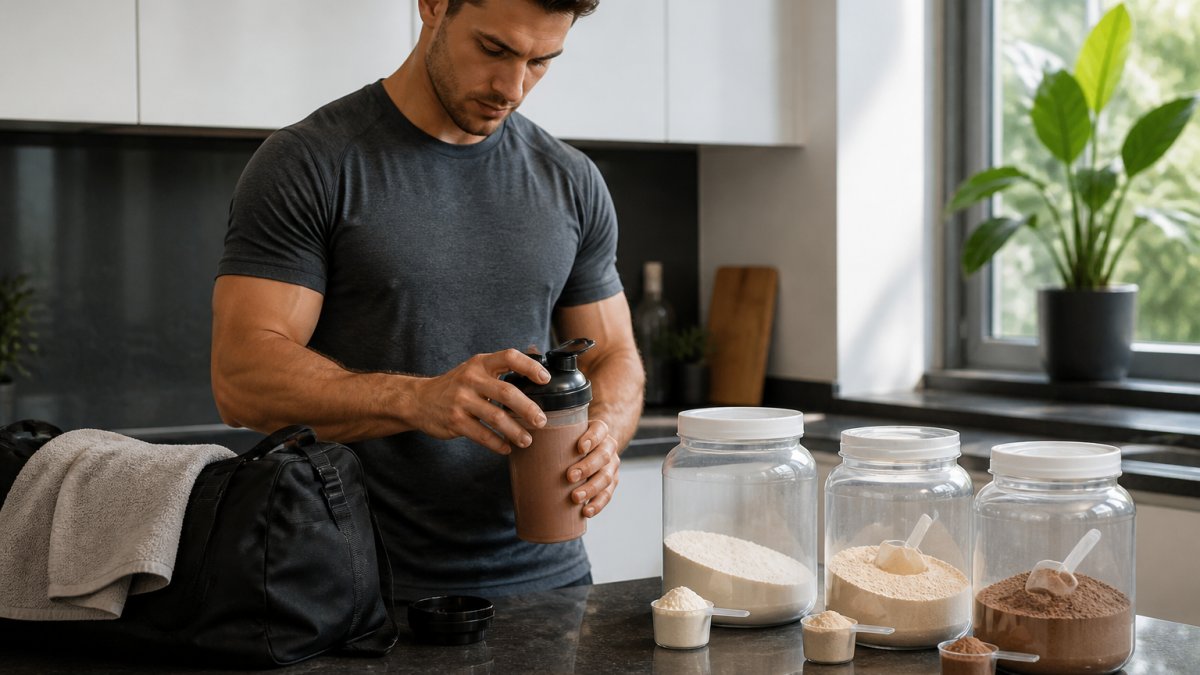
Whey isolate digests quickly and carries a high leucine content, which is why it dominates post-workout routines. The Chocolate Whey Isolate keeps the ingredient list to three items: whey isolate, natural flavours, and stevia.

Plant-based athletes are not locked out. Our Plant Based Sport Protein blends vegan sources with probiotics and digestive enzymes, which helps offset the lower digestibility of some plant proteins.
Which Protein Powder Fits Your Training and Diet
- Dairy-tolerant and cutting: whey isolate, for high protein per scoop with minimal carbs and fat.
- Dairy-free or vegan: plant-based sport protein, ideally paired with a slightly larger serving.
- Wanting convenience and flavour: a chocolate isolate you will actually drink daily beats a "better" powder you avoid.
BCAAs for Muscle Recovery: What the Evidence Actually Shows
BCAAs for muscle recovery are the most oversold category on this list. Branched-chain amino acids, leucine, isoleucine, and valine, do trigger muscle protein synthesis, but the effect is small and largely redundant if you already eat enough total protein. The honest framing is that BCAAs are a partial protein, not a recovery shortcut.
What the mechanism actually does
Leucine is the key signal here. It activates the mTOR pathway, which kicks off muscle protein synthesis. The catch is that synthesis needs all nine essential amino acids as building blocks, not just the three BCAAs.
A common pattern in the research is that BCAA supplementation shows modest reductions in delayed-onset muscle soreness (DOMS) and perceived fatigue in untrained or fasted subjects, but the effect shrinks or disappears when daily protein intake is adequate.
When BCAAs might earn a place
- Training fasted or in a deep calorie deficit: a complete essential amino acid (EAA) blend is the better choice, but BCAAs can take the edge off if EAA is unavailable.
- Very low total protein intake: BCAAs are a stopgap, not a fix. Raise total protein first.
- Dietary restrictions: if you struggle to hit protein targets from food, a complete protein powder beats a BCAA tub on cost per gram of usable amino acids.
Dose, timing, and the cost trade-off
Typical BCAA doses in studies range from about 5 to 15 g, often taken before or during training. A 2:1:1 leucine-to-isoleucine-to-valine ratio is the most common commercial format, though the ratio is not strongly supported as superior.
The cost trade-off is the real story. Per gram of usable amino acids, BCAAs are usually more expensive than whey or plant protein, and they deliver less.
Watch Out
BCAAs do not replace whole protein. Relying on them as your main recovery supplement while missing your daily protein target is the most common way people waste money in this category. If you train fasted or eat very little around sessions, a complete amino acid source serves you better than BCAAs alone.
Evidence grade
Moderate for soreness in untrained or fasted contexts; weak for recovery in well-fed athletes. Treat BCAAs as optional, not foundational.
Electrolytes for Post-Workout Recovery and Hydration
Electrolytes for post-workout recovery matter most when you sweat heavily, train in heat, or go long. Sodium, potassium, magnesium, and calcium are lost in sweat, and replacing them supports fluid balance and normal muscle contraction.
Our Rapid Rehydr8 Electrolyte Capsules combine sodium, potassium, calcium, magnesium, and vitamin D-3 in an easy-to-swallow capsule. They are a sensible pick for endurance athletes and anyone prone to cramping during long sessions.

Creatine, Magnesium, and Other Evidence-Graded Recovery Ingredients
This is where most recovery supplement lists blur together. Below, each ingredient is graded by the strength of human evidence, given a realistic dose, and flagged for safety concerns, the three things a product roundup usually skips.
Creatine monohydrate, strong evidence
Creatine monohydrate is the most researched sports supplement available. It supports strength, power, and repeated high-intensity efforts, and it indirectly helps recovery by improving training quality and glycogen storage. A maintenance dose of 3 to 5 g per day is standard; a loading phase of about 20 g per day split into four doses for 5 to 7 days saturates muscles faster but is optional.
Safety: long-term use is well studied in healthy adults. People with kidney disease should consult a clinician first. Expect a small weight gain from water retention inside muscle, not bloating.
Magnesium, moderate evidence, high prevalence of shortfall
Magnesium supports normal muscle function and is involved in hundreds of enzyme reactions, including energy metabolism and muscle relaxation. Many people fall short on dietary magnesium, so a supplement can help, particularly for sleep quality and muscle relaxation in people who are deficient.
Rapid Rehydr8 Electrolyte Capsules Muscle Recovery Cramp Support Supplement →
Dose: commonly 200 to 400 mg elemental magnesium in the evening. Safety: people with kidney impairment should not supplement without medical advice, and high doses can cause gastrointestinal upset.
Zinc and vitamin B6 (ZMA), mixed evidence
Zinc and vitamin B6 are involved in recovery and hormone function, and ZMA bundles them with magnesium. The evidence for ZMA specifically improving recovery or testosterone in well-nourished athletes is mixed and generally weak. It is most useful as a correction for a genuine deficiency, not as a performance enhancer.
Dose: follow label directions; avoid long-term zinc intake above the upper limit without guidance, as excess zinc can interfere with copper absorption.
Beta-alanine, moderate evidence for short, high-intensity efforts
Beta-alanine raises muscle carnosine, which buffers acid during short, high-intensity efforts. It has reasonable support for efforts lasting roughly 1 to 4 minutes. It is not a recovery supplement in the repair sense, but it can reduce the fatigue that accumulates across repeated bouts.
Dose: about 3.2 to 6.4 g per day, split into smaller doses to reduce the harmless but unpleasant tingling (paresthesia).
Glutamine, weak evidence in well-fed athletes
Glutamine's recovery benefits are modest at best in well-fed athletes. It may help in clinical or immune-stressed contexts, but for healthy trainees eating enough protein, the effect is small.
Dose: commonly 5 to 10 g per day if used. Safety: generally well tolerated.
Dose, timing, and duration by supplement
| Supplement | Dose | Timing | Duration | Notes |
|---|---|---|---|---|
| Protein | 20-40 g | Within a few hours of training | Daily | Total daily intake matters most |
| Creatine monohydrate | 3-5 g | Any time, daily | Ongoing | Consistency beats timing |
| Electrolytes | 1-2 capsules | Around training | As needed | Scale up in heat |
| Magnesium | 200-400 mg elemental | Evening | Ongoing if deficient | Glycinate or citrate preferred |
| Beta-alanine | 3.2-6.4 g | Split across day | 4+ weeks to load | Tingling is harmless |
| Collagen peptides | Per label | Daily | Ongoing | Best with vitamin C |
Pro Tip
Grade before you buy. If an ingredient has weak evidence in well-fed athletes, spend your recovery budget on protein and creatine first. Supplements are a stack, not a lottery, each layer should earn its place.
Safety and interactions to know
- Kidney conditions: creatine and high-dose magnesium warrant clinician input.
- Medications: zinc and magnesium can interact with some antibiotics and diuretics; check with a pharmacist.
- Pregnancy or breastfeeding: consult a clinician before adding any sports supplement.
Collagen Peptides for Joint and Connective Tissue Support
Collagen peptides target a different tissue than protein powder: tendons, ligaments, and cartilage. Connective tissue adapts slowly, so this is a long-game supplement rather than a fast fix.
Our Collagen Peptides formula uses three clinically researched, patented grass-fed bovine peptides, Verisol, Fortibone, and Fortigel, each studied for support of skin, bone, and joint collagen production. If your training involves heavy loading or repetitive impact, it is a reasonable addition alongside adequate protein and vitamin C.
Safety, Contraindications, and How to Vet Product Quality
Safety deserves more attention than it usually gets. Supplements are lightly regulated in most markets, so quality control is on you.
- Check for third-party testing. NSF Certified for Sport, as carried by our vanilla whey, screens for banned substances and contaminants.
- Read the full ingredient list. Short lists with recognisable ingredients are easier to trust.
- Watch for interactions. If you take medication or manage a health condition, speak to your doctor before adding anything.
Pro Tip
Buy from brands that publish their testing and use patented, named ingredients. A patented ingredient like Fortigel tells you the raw material is traceable, which is a stronger signal than a flashy label.
Recovery Beyond Supplements: Sleep, Nutrition, and Training Load
No supplement fixes poor sleep or chronic overtraining. Sleep is the single most powerful recovery tool available, and most adults need seven to nine hours. Total calories and protein intake determine whether your body has the raw material to repair itself. Training load management decides how much repair is needed in the first place.
Key Takeaway
Supplements are the final layer, not the foundation. Nail sleep, food, and load management first, then add protein, creatine, and electrolytes where they fill a genuine gap.
Frequently Asked Questions
What are the best supplements for muscle recovery after a workout?
Protein powder and creatine monohydrate have the strongest evidence for supporting muscle recovery. Protein delivers the amino acids needed to repair tissue, while creatine helps restore energy capacity between sessions. Electrolytes support rehydration after sweaty training, and collagen peptides may help with joint and connective tissue. BCAAs are less useful if you already hit your daily protein target. Prioritise protein, creatine, and hydration first, then add other recovery supplements based on your sport, diet, and budget.
Do BCAAs really help with recovery?
BCAAs for muscle recovery show limited benefit when your overall protein intake is already adequate. A complete protein source like whey or plant protein provides the same branched-chain amino acids plus the full spectrum your body needs. BCAAs may be useful for athletes training fasted or eating low-protein diets, but they are not a priority purchase for most people. Spend your supplement budget on protein and creatine first, then reassess whether BCAAs add anything to your routine.
How soon after a workout should you take recovery supplements?
Protein is best taken within a couple of hours of training, and the exact minute matters less than your total daily intake. Creatine works through saturation, so timing is flexible as long as you take it consistently each day. Electrolytes for post-workout recovery are most useful immediately after heavy sweating or long endurance sessions. Collagen peptides can be taken daily, ideally 30 to 60 minutes before training if joint support is your goal. Consistency across the week beats perfect timing on any single day.
Are post-workout supplements necessary for muscle recovery?
Not strictly necessary if your diet already covers protein, calories, and hydration. Food-first recovery with balanced meals, adequate sleep, and smart training load handles most of the work. Supplements become useful when you struggle to hit protein targets, train in heat, or have high training volumes. Protein powder for workout recovery is a convenience tool, not a magic bullet. If you eat well and sleep enough, you can recover effectively without a cabinet full of products.
Which ingredients have the strongest evidence for supporting workout recovery?
Protein, creatine monohydrate, and hydration via electrolytes have the most consistent evidence. Protein supports muscle repair, creatine aids energy restoration and training capacity, and electrolytes replace what you lose through sweat. Magnesium and zinc play supporting roles in muscle function and are worth covering through diet or a basic formula. Collagen peptides have emerging evidence for joint and connective tissue. Ingredients like glutamine and BCAAs have weaker support for recovery in well-fed athletes.
Recovery is a system, not a shopping list. If you want a curated starting point, Calmpulseco stocks the essentials in one place: NSF Certified for Sport whey isolate for muscle repair, Rapid Rehydr8 electrolytes for hydration and cramp support, and collagen peptides for joint and connective tissue. Get started with Calmpulseco and build a recovery routine that fits the way you actually train.