Cart
0

Table of Contents
- Why Balancing Fitness and Professional Life Feels Impossible (And How to Fix It)
- Building a Fitness Routine for Busy Professionals That Actually Sticks
- How to Fit Exercise Into a Busy Schedule Without Rearranging Your Whole Day
- The Workout Schedule for Working Professionals: Sample Plans by Job Type
- Quick Workouts for Busy Professionals: 15, 25, and 40-Minute Options
- Recovery, Sleep, and the Warning Signs of Burnout
- Conclusion
- Frequently Asked Questions
Last Updated: October 21, 2026
Why Balancing Fitness and Professional Life Feels Impossible (And How to Fix It)
Learning how to balance fitness and professional life starts with one honest admission: the problem is rarely motivation, and real balance fitness rarely comes from willpower alone. It is decision fatigue. By the time your last meeting ends, you have made hundreds of choices, and the gym becomes choice number 301.
At Calmpulseco, we hear this constantly from customers in demanding roles. The fix is not a tougher mindset. It is a smaller, pre-decided plan.
The Real Cost of Skipping Movement
Skipping movement rarely shows up as a dramatic collapse. It shows up quietly:
- Energy dips by mid-afternoon
- Sleep gets lighter and less restorative
- Focus shortens during deep work blocks
- Stress builds with fewer outlets to release it
Many professionals find that the busiest weeks are exactly when movement matters most. Not for abs. For the mental reset between work and home.
A Decision Framework for Workout Duration and Intensity
Use this simple framework before you open a calendar. It removes the daily debate.
| Time Available | Intensity | Best Option |
|---|---|---|
| 15 minutes | Moderate | Resistance bands, bodyweight circuit |
| 25 minutes | Moderate to high | Jump rope intervals plus strength work |
| 40 minutes | High | Full strength session plus cardio finish |
| Under 10 minutes | Low | Walk, stretch, breathwork |
The rule: match the session to the time you actually have, not the time you wish you had. A short workout done is worth more than a long workout skipped.
Pro Tip
Decide your session length the night before, not the morning of. Morning-you has no negotiating power if the plan is already set.
Building a Fitness Routine for Busy Professionals That Actually Sticks
A fitness routine for busy professionals works when it is boring, repeatable, and small. Consistency beats intensity every single time.
Start With Three Non-Negotiables
Pick three commitments you will keep even in your worst week. Not five. Three.
- One strength session per week
- A daily walk, even if it is short
- A fixed sleep window
Everything else is a bonus. This is how habit building survives a heavy workload.
Watch Out
The most common mistake is starting with five weekly sessions. Miss two, feel like a failure, quit entirely. Start smaller than feels impressive.
How to Fit Exercise Into a Busy Schedule Without Rearranging Your Whole Day
The answer to how to fit exercise into a busy schedule is not finding extra hours. It is attaching movement to things that already happen.
Calendar Planning That Survives a Chaotic Week
Treat workouts like meetings with yourself. Block them, protect them, and give them a real title.
- Book sessions at the start of the week, not daily
- Use 20-minute blocks, not 60
- Keep one flexible "buffer" slot for a disrupted day
- Pair exercise with an existing habit, like a call-free lunch
The American Heart Association physical activity guidance recommends regular moderate activity for adults, and short sessions count toward that total.
Key Takeaway
You do not need a perfect week. You need a plan that bends instead of breaking.
The Workout Schedule for Working Professionals: Sample Plans by Job Type
A workout schedule for working professionals should match the physical demands of the job. A desk worker and a warehouse worker need very different plans. Most advice stops at that sentence. Here are actual sample weeks you can adapt.
Desk-Based Roles: Sample Week
Desk work means long periods of sitting, so the goal is movement and strength without adding more chair time.
- Monday: 25-minute full-body strength (band squats, rows, push-ups)
- Tuesday: 20-minute walk at lunch plus 10 minutes of mobility
- Wednesday: 15-minute bodyweight circuit between meetings
- Thursday: 25-minute strength session
- Friday: 30-minute brisk walk or easy cardio
- Weekend: One longer session (40 minutes) or a hike
A common pattern is to keep two strength sessions and fill the rest with walking. That totals roughly 150 minutes of moderate activity, which aligns with the American Heart Association physical activity guidance for adults.
Physically Demanding Roles: Sample Week
If your job already involves lifting, carrying, or being on your feet, extra training volume is often counterproductive. Prioritize recovery and targeted strength.
- Monday: 20-minute mobility and stretching
- Tuesday: 20-minute strength focused on weak links (core, hips, upper back)
- Wednesday: Rest or easy walk
- Thursday: 20-minute strength session
- Friday: Rest or gentle yoga
- Weekend: One short session or full rest
The rule here is to count work activity as training load. Adding heavy cardio on top of a physical job is a fast route to overtraining.
Remote and Traveling Workers: Sample Week
Portability matters more than equipment. A resistance band set and a jump rope cover strength and cardio in almost no space.
- Monday: 15-minute band circuit
- Tuesday: 20-minute jump rope intervals
- Wednesday: 10-minute mobility plus a walk
- Thursday: 25-minute band strength
- Friday: 15-minute bodyweight circuit
- Weekend: One 30-minute session or an outdoor activity
Keep a fallback routine saved on your phone for hotel rooms and unfamiliar cities.
Shift Workers: Sample Week
Shift work disrupts sleep and appetite, so anchor workouts to a fixed time relative to sleep, not to the clock.
- After waking: 10 minutes of light movement to raise alertness
- Mid-shift: A short walk or stretch break
- Before sleep: Gentle mobility, never intense training
- Days off: Two strength sessions when energy is highest
Consistency matters more than the hour. A shift worker who trains at the same point in their personal day will adhere better than one chasing a fixed clock time.
Parents and Long Commuters: Sample Week
Time is fragmented, so shorter sessions win.
Resistance Training & Cardio Bundle →
- Monday: 15-minute home circuit
- Tuesday: Walk during a commute break
- Wednesday: 20-minute strength at home
- Thursday: 10-minute mobility
- Friday: 15-minute circuit
- Weekend: Family walk or playground-based activity
Our Resistance Training & Cardio Bundle fits both desk and physical profiles. It packs into a carry bag, so it works in a hotel room, a small flat, or a corner of the office.

Key Takeaway
Pick the sample week closest to your job, run it for two weeks, then adjust based on energy and sleep. A plan you actually follow beats a perfect plan you abandon.
Quick Workouts for Busy Professionals: 15, 25, and 40-Minute Options
Quick workouts for busy professionals work best when the format is decided in advance. Here are three ready-to-use sessions.
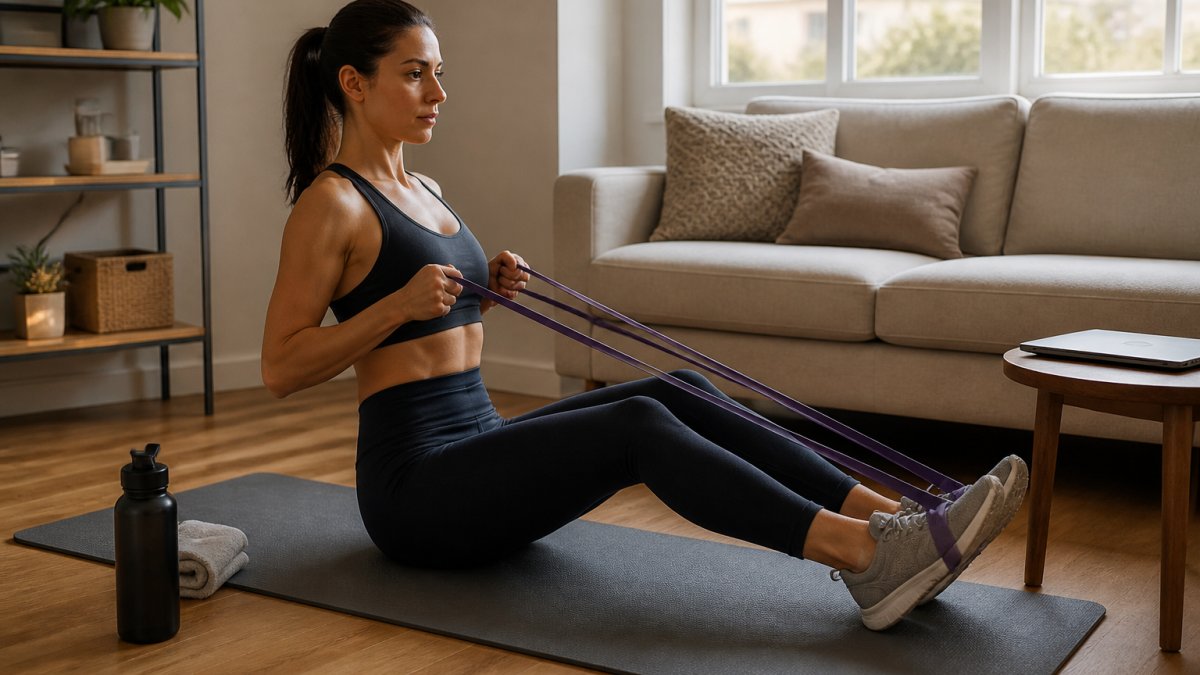
15 minutes: Three rounds of band squats, band rows, and a 60-second jump rope burst.
25 minutes: Five rounds of jump rope intervals, push-ups, and band work, with 60 seconds rest between rounds.
40 minutes: Ten minutes of strength work, twenty minutes of steady cardio, ten minutes of stretching and breathwork.
A mat makes floor work far more comfortable. Our Exercise Mat is a 7x5ft non-slip surface that suits yoga, HIIT, and floor workouts, and it rolls up with a carry strap.

For hydration, the Fitness Water Bottle has a leak-proof cap and a large capacity for longer sessions.

Recovery, Sleep, and the Warning Signs of Burnout
Recovery is not the reward for training. It is part of the training. Sleep, rest days, and stress management decide whether your routine lasts. Work stress and training stress draw from the same recovery budget, which is why a hard week at work can make a normal workout feel brutal.
How Work Stress and Training Load Interact
Your body responds to all stress through a similar system. A demanding deadline, poor sleep, and a heavy leg session all add to the same load. When work stress rises, training volume should usually fall, not rise. Many professionals make the opposite mistake: they train harder to cope, then wonder why they feel worse.
A practical rule: on weeks with unusual work stress, cut training volume by roughly a third and keep the habit alive with shorter sessions.
Warning Signs of Overtraining and Burnout
Watch for these signs, and treat several appearing together as a signal to back off:
- Resting heart rate creeping up over several days
- Workouts that feel harder than they should at the same weights
- Poor sleep despite fatigue
- Irritability and low motivation
- Nagging aches that do not settle
- Appetite changes or frequent minor illnesses
These are not signs of weakness. They are signs that the recovery budget is overdrawn.
A Simple Adjustment Protocol
When two or more warning signs appear together, use this one-week reset:
- Cut training volume by about half.
- Replace intense sessions with walking, yoga, or breathwork.
- Protect sleep with a fixed window, even on busy days.
- Reassess after seven days before returning to normal volume.
Walking, yoga, and breathwork count as training during recovery. They maintain the habit without adding load.
Sleep as the Foundation
Most adults need seven to nine hours of sleep, according to widely cited public health guidance. Sleep is when adaptation happens. A short workout plus good sleep beats a long workout plus poor sleep almost every time. If you must choose between an extra 30 minutes of training and 30 minutes of sleep, choose sleep.
Pro Tip
Active recovery beats total rest for most people. A 20-minute walk often does more for sore legs than a day on the sofa.
Watch Out
If warning signs persist for more than two weeks despite reduced training, or if you experience chest pain, fainting, or severe fatigue, consult a healthcare professional. This article is general guidance, not medical advice.
Conclusion
The hardest part of balancing fitness with a demanding career is not the workout. It is protecting the decision long enough to make it a habit. Start with three non-negotiables, match session length to real available time, and treat recovery as part of the plan.
At Calmpulseco, we curate gear that makes that plan easier to keep: portable strength tools, a mat that works in any room, and hydration you can carry anywhere. Add to Cart and build a routine that fits the life you actually have.
Frequently Asked Questions
How many days a week should a busy professional work out?
Three to four focused sessions per week is enough to build and maintain strength and cardiovascular health when the sessions are structured. Two of those can be strength training, one can be cardio, and one can be a lighter mobility or walking day. The rest of the week, aim for daily steps and active recovery rather than full workouts. Consistency across months matters more than squeezing in a fifth session that leaves you exhausted and skipping the next week.
How do you stay consistent with exercise when work gets demanding?
Shrink the commitment instead of canceling it. On heavy work weeks, swap a 45-minute session for a 15-minute version using resistance bands or bodyweight movements so the habit stays intact. Schedule workouts in your calendar as fixed appointments, treat them as personal time, and protect them the way you would a client call. Building consistency through realistic habits beats relying on motivation, which rarely survives a deadline week.
How can you avoid burnout while balancing work and fitness?
Watch for warning signs: persistent fatigue, declining performance in workouts, irritability, and poor sleep. When those appear, cut training volume before cutting sleep. Prioritize rest days, keep hydration and nutrition steady, and use short breathwork or meditation sessions to manage stress. Fitness should add energy to your professional life, not drain it. If training leaves you more depleted than refreshed for two weeks straight, reduce intensity and rebuild gradually.
What are some ways to stay active during the workday?
Stack movement onto things you already do. Take walking calls, stand during long meetings, use the stairs, and set a timer for a two-minute stretch every hour. A short walk after lunch supports energy levels and digestion. Keep a resistance band or jump rope near your desk for a five-minute burst between tasks. These small blocks add up, and they make the transition into a full workout later in the day easier.
This article is for general information and is not medical advice. Check with a qualified professional before starting a new exercise plan, especially if you have existing health conditions.