Cart
1

Last Updated: October 30, 2026
Quick Summary
To verify supplement quality and purity, request the batch-specific certificate of analysis (COA) matching the lot number on your bottle and confirm it lists identity, potency, and contaminant tests with measured results. Check any certification seal, such as USP Verified, on the certifying body's official directory before trusting it.
- A lot number is the batch code printed on the bottle, usually near the expiration date.
- A COA should name the testing laboratory, the lot it covers, the methods used, and pass/fail results.
- HPLC, ICP-MS, GC-MS, and microbial plating are the common analytical methods named on a COA.
- A contaminant result of not detected only means something if you know the detection limit.
- A COA proves one batch was tested on a given date, not that every future batch gets the same treatment.
Table of Contents
- Why Supplement Quality and Purity Matter
- How to Read Supplement Labels Before You Verify Anything
- How to Verify Supplement Authenticity and Batch Traceability
- Third-Party Tested Supplements: What the Claim Actually Means
- USP Verified Supplements and Other Certification Marks
- What a Certificate Does and Does Not Guarantee
- A Step-by-Step Verification Workflow for Busy Buyers
- What to Do When a Supplement Fails a Check
- Frequently Asked Questions
Why Supplement Quality and Purity Matter
A supplement is only as good as what's inside the capsule.
The stakes are practical. A product with weak quality control can fall short on the ingredient it advertises and carry contaminants the label never mentions.
Watch out: the biggest mistake is trusting a bold front-of-bottle claim like "premium" or "pure" without checking the back panel or a testing record.
Quality shows up in three places:
- Ingredient identity, is the herb or vitamin actually what the label says?
- Potency, does the dose match the label claim?
- Purity, is the product free of heavy metals, microbes, and pesticides?
If you want to understand why some products cost more, our breakdown of why premium supplements cost more explains the testing and sourcing behind the price gap.
How to Read Supplement Labels Before You Verify Anything
Start with the Supplement Facts panel. It's the most regulated part of the label and the easiest place to spot a weak product.
Here's what to scan first:
- Serving size and servings per container, a "6000 mg blend" often spreads across multiple capsules
- Proprietary blends, these hide individual doses, which makes potency impossible to check
- Other ingredients, fillers, flow agents, and artificial colors tell you about manufacturing priorities
A label with vague blends and no testing claim is a yellow flag. Not proof of a bad product, but a reason to dig further.
How to Verify Supplement Authenticity and Batch Traceability
Authenticity comes down to one question: can the maker prove this specific bottle was tested? The answer lives in the lot number and the certificate of analysis. Most buyers stop at requesting the COA; the real skill is reading it and confirming it applies to the bottle in your hand.
Lot Numbers and Certificates of Analysis
A lot number is the batch code printed on the bottle, usually near the expiration date. A certificate of analysis (COA) is the lab document tied to that batch. It lists what was tested and the results.
Ask the manufacturer for the COA matching your lot number. A real one includes:
- The testing laboratory's name and accreditation
- The batch or lot it covers
- The tests run: identity, potency, and contaminant screens
If a brand can't produce a batch-specific COA, treat its quality claims as unverified. A generic certificate covering "a sample" tells you little about the bottle in your hand.
How to Interpret a Certificate of Analysis
A COA is only useful if you can read it.
Batch number match. The lot number on the COA must match the lot number on your bottle exactly.
Test methods. Each test should name the analytical method used. Common methods include:
- HPLC (high-performance liquid chromatography) for potency and identity of many vitamins and botanicals
- ICP-MS (inductively coupled plasma mass spectrometry) for heavy metals like lead, arsenic, cadmium, and mercury
- GC-MS (gas chromatography-mass spectrometry) for pesticide residues and some solvents
A COA that lists a test without a method is harder to evaluate.
Detection limits. Every test has a limit of detection (LOD) and a limit of quantification (LOQ).
Pass/fail criteria. The COA should state the specification each result is compared against.
Pro Tip
If a brand publishes only a sample COA on its website, email and ask for the certificate matching your specific lot number. A brand that can't or won't provide it is telling you something.
Matching a Lot Number to Documentation
The lot number is your link between the bottle and the paperwork. Here's how to use it:
- Locate the lot number on the bottle, usually stamped or printed near the expiration date, sometimes on the bottom.
- Request the COA for that exact lot from the manufacturer or retailer.
- Compare the lot number on the COA to the one on your bottle. They should match character for character.
- Check the test date against the manufacture date. A COA dated well before or after the batch was made deserves a question.
If the lot number is missing, illegible, or doesn't match available documentation, treat the product's quality claims as unverified.
Third-Party Tested Supplements: What the Claim Actually Means
"Third-party tested" means an outside lab, not the manufacturer, ran the analysis. That independence is the whole point. When a company tests its own product, the fox is watching the henhouse.
The claim is only as strong as the lab behind it. Look for a named testing laboratory and a certificate you can actually request. A brand that says "third-party tested" but won't share results is asking for trust it hasn't earned.
Contaminants: Heavy Metals, Bacteria, and Pesticides
Independent testing typically screens for three contaminant groups:
Carlyle Moringa Oleifera | 180 Capsules | Non-GMO and Gluten Free Supplement →
- Heavy metals, lead, arsenic, cadmium, and mercury, often from soil where ingredients grow
- Microbial contamination, bacteria, yeast, and mold that can creep in during manufacturing
- Pesticides, residue from farming, especially in botanical ingredients
A thorough COA reports each of these with measured levels, not just a checkmark. For botanical products like a green superfood powder, contaminant screening matters even more because the raw material comes straight from soil.
USP Verified Supplements and Other Certification Marks
A verification mark is a seal from an independent body confirming a product met specific testing standards.
Other marks exist, and they don't all mean the same thing. Some verify the finished product; others only confirm a facility follows good manufacturing practices (GMP).
Here's the practical difference:
| Mark Type | What It Confirms | What It Skips |
|---|---|---|
| USP Verified | Identity, potency, contaminants, facility audit | Nothing major, but only some products apply |
| NSF Certified for Sport | Identity, potency, contaminants, plus banned-substance screening | Not a clinical effectiveness claim |
| Informed Choice / Informed Sport | Batch testing for banned substances and contaminants | Not a full potency or identity audit of every ingredient |
| GMP facility certification | Manufacturing process and quality control | Finished-product testing |
| Brand self-certification | Whatever the brand chooses to state | Independent verification |
The U.S. Pharmacopeia's verification program publishes a searchable list of verified products. If a bottle carries the seal, confirm it there.
How to Verify a Certification Seal on an Official Directory
A seal you can't verify is decoration. Here's how to confirm each major mark:
USP Verified. Go to the USP verification program's website and search the product name or manufacturer. The directory lists verified products and the manufacturer. If the product isn't listed, the seal is either expired, counterfeit, or misapplied.
NSF Certified for Sport. NSF International maintains a searchable directory of certified products. Search by product name or brand.
Informed Choice / Informed Sport. These programs publish lists of certified products and batches. Because certification is batch-specific, confirm that your lot number falls within a certified batch when possible.
GMP registration. A GMP certificate covers the facility, not the finished product.
Watch Out
A seal printed on a label is not proof of certification. Seals can be outdated, applied to products that no longer hold certification, or in rare cases counterfeited. Always confirm the product on the certifying body's official directory before trusting the mark.
What Each Certification Program Actually Covers
Certification programs differ in scope, and the differences matter:
- USP Verified tests identity, potency, and contaminants, and audits the manufacturing facility. It is one of the broadest finished-product verifications available, but not every product applies, and the program does not evaluate clinical effectiveness.
- NSF Certified for Sport adds screening for substances banned in sport on top of identity, potency, and contaminant testing. It is particularly relevant for athletes subject to anti-doping rules.
- Informed Choice / Informed Sport focuses on banned-substance and contaminant testing, often on a batch-by-batch basis. It is strong evidence on contamination but not a full identity and potency audit.
None of these marks guarantee a supplement will work for your specific goal. They are evidence about identity, purity, and manufacturing, not clinical effectiveness. Pair a verified seal with a batch-specific COA and a consistent brand track record for a much stronger basis for trust than a logo alone.
What a Certificate Does and Does Not Guarantee
A COA proves one batch was tested against stated limits on a given date. That's it. It is not a lifetime guarantee.
What it does guarantee:
- The named tests were run on that lot
- Results met the lab's pass/fail criteria
- A record exists you can trace
What it does not guarantee:
- That every future batch gets the same treatment
- That the test methods were the right ones for the ingredient
- That the product works for your specific goal
This is where most buyers get tripped up. A certificate is evidence, not a promise. Pair it with a consistent brand track record and you have something worth trusting.
A Step-by-Step Verification Workflow for Busy Buyers
You don't need a chemistry background to check a bottle. You need fifteen minutes and a short checklist. Here's the workflow we'd use.
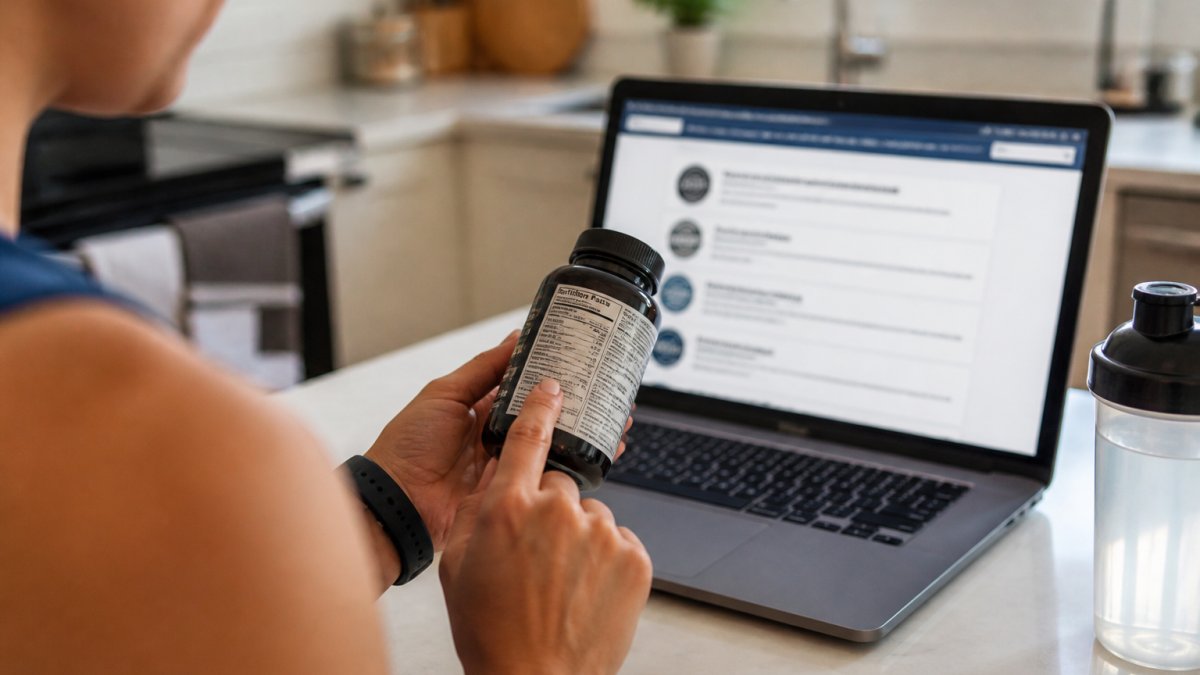
- Read the Supplement Facts panel. Note the serving size, the dose per ingredient, and any proprietary blends.
- Check for a certification seal. Look for USP Verified or a comparable independent mark.
- Confirm the seal on the official directory. A seal you can't verify is decoration.
- Find the lot number. It's usually printed near the expiration date.
- Request the COA for that lot. Email the manufacturer or check its website.
- Review the testing laboratory and results. Identity, potency, and contaminant screens should all appear.
- Cross-check the label claim against the COA. The dose on the bottle should match the tested potency.
If you want a product to practice on, the Complete Multivitamin Immunity Boost and the Carlyle Moringa Oleifera capsules are both available in the catalog.


What to Do When a Supplement Fails a Check
A failed check isn't always a bad product. Sometimes it's a missing document. The response depends on what went wrong.
- No COA available, ask directly. If the brand won't share batch testing, move on.
- Potency below the label claim, that's a label accuracy failure. Stop using it and request a refund.
- Contaminant levels above limits, stop immediately. Report it to the retailer and, where relevant, the relevant food and supplement regulator.
Keep your receipts and lot numbers. A batch-specific complaint is far more useful to a regulator than a general one.
Verifying every bottle takes effort, and most people don't have time to chase certificates for every product. That's the gap we built Calmpulseco to close.
Frequently Asked Questions
How can you tell if a supplement is high quality?
Start with the label: it should name every ingredient, state amounts per serving, and list a manufacturer with a contact address. Then look for independent verification, such as a USP Verified mark or a certificate of analysis tied to a lot number. Quality also depends on manufacturing under good manufacturing practices, so check whether the facility is audited. A product that passes identity, potency, and contaminant testing is a safer bet than one relying on marketing claims alone.
How can you verify that a supplement has been third-party tested?
Third-party tested supplements should name the testing laboratory or certification program, not just print the phrase on the bottle. Look for a seal such as USP Verified, then confirm it on the certifier's official directory rather than trusting the image. You can also ask the manufacturer for a certificate of analysis for your specific lot number. If the company cannot produce batch-specific results or name the lab, treat the claim as unverified.
What does USP Verified mean for a supplement?
USP Verified supplements have been reviewed against USP's standards for ingredient identity, potency, and allowable contaminant limits, and the manufacturing facility is audited for good manufacturing practices. The mark means the product passed those checks at the time of verification. It does not prove the supplement will work for your specific goal, and it is not a substitute for medical advice. Confirm the mark on USP's official directory before relying on it.
Does third-party testing guarantee that a supplement is safe or effective?
No. Testing confirms that a batch meets specified criteria for identity, potency, and contaminant limits, which reduces risk but does not prove clinical benefit. A product can pass every test and still not deliver the outcome you want, because efficacy depends on dose, form, and your own health. Treat testing as one filter in a broader decision: read the label, verify the certification, check the lot-specific certificate, and speak to a healthcare professional about whether the supplement suits you.