Cart
1

Last Updated: October 28, 2026
Quick Summary
The signs your activewear is low quality usually show up before the first wash: fabric that stays baggy after stretching, seams that pucker or show daylight through stitch holes, and leggings that turn see-through under tension. Test opacity by stretching the fabric over a lamp and squatting in front of a mirror, and check stretch recovery by pulling the thigh or seat fabric for five seconds.
- Pull fabric sideways for five seconds and release; quality fabric snaps back almost immediately.
- Hold fabric to a bright window and stretch it, since any light passing through means it will go sheer.
- Run a thumb along the crotch and waistband seams, then tug gently to check seam strength.
- Wash activewear cold, inside out, skip fabric softener, and air dry to prevent shrinkage.
- A defect appears early in one spot, while poor care shows up gradually across the whole garment.
Table of Contents
- Why Low Quality Activewear Fails You
- How to Tell If Leggings Are Good Quality
- How to Test Leggings for Transparency
- How to Check Clothing Quality Before You Buy
- Does Activewear Shrink? What Fabric and Care Actually Do
- Fabric Composition and Performance Trade-Offs
- Manufacturing Defect or Poor Care? How to Tell the Difference
- Find Your Next Quality Piece at Calmpulseco
- Frequently Asked Questions
Why Low Quality Activewear Fails You
Most people blame their body when workout clothes let them down. The truth is simpler. Low-quality activewear fails because the fabric, seams, and construction were never built for movement in the first place.
A pair of leggings may seem fine in the fitting room, then sag, go see-through, or lose its shape within weeks. Thin fabric, weak elastic, and cheap stitching can contribute to these problems.
The signs your activewear is low quality usually show up before the first wash. You just need to know where to look.
How to Tell If Leggings Are Good Quality
Good leggings pass three quick checks: they stay opaque when stretched, they spring back after pulling, and the seams lie flat without puckering. If a pair fails any one of these, walk away.
Here is what to look for in the fitting room:
- Stretch recovery: Pull the fabric sideways, then release. Good fabric snaps back fast. Weak fabric stays baggy.
- Waistband grip: A quality waistband stays put when you bend. For deeper guidance, see which high-waisted running leggings stay up best. A cheap one rolls down.
- Seam feel: Run a finger inside the seam. Rough, thick seams will chafe during long sessions.
- Fabric weight: Thin fabric shows every bump and goes see-through fast.
The Squat Test and the Light Test
Two tests catch most problems in under a minute.
The squat test: Put the leggings on and squat deep in front of a mirror. If you can see skin or underwear through the fabric, the opacity is too low for real training.
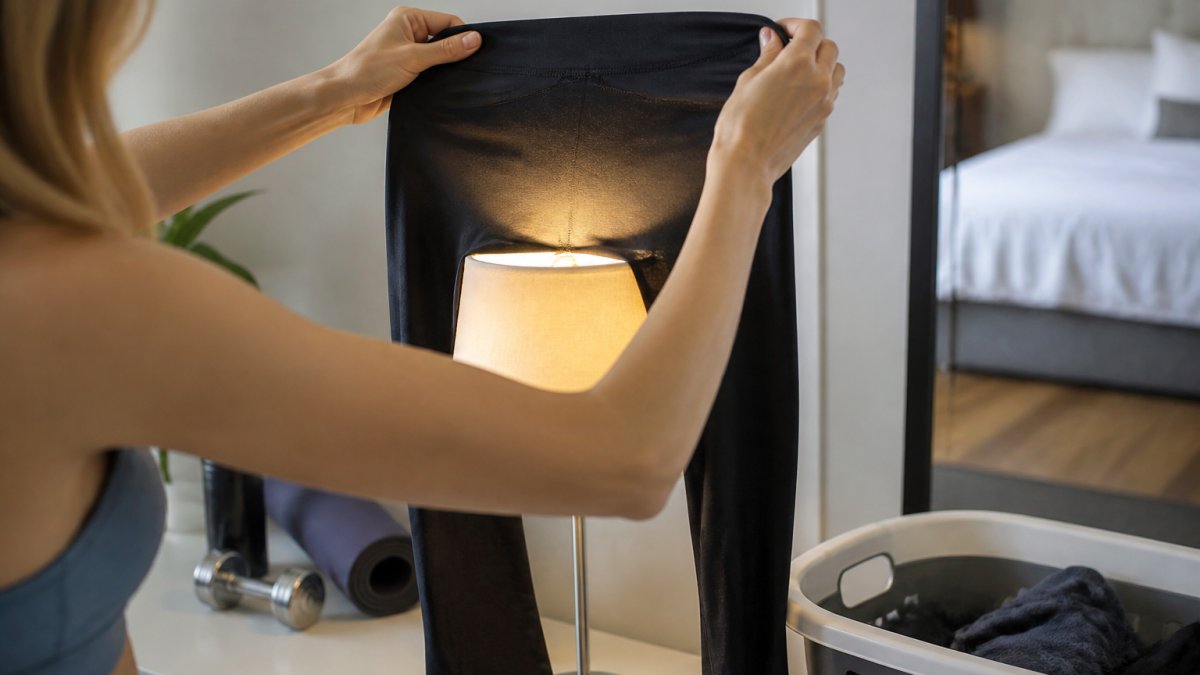
The light test: Hold the fabric up to a bright window or lamp. Stretch it slightly. Any light passing through the stretched area means the leggings will go see-through when you move.
Both tests work best on the areas that stretch most: the seat, the inner thigh, and the knees.
How to Test Leggings for Transparency
Transparency testing is simple, and it is the single most useful quality check you can do at home. Stretch the fabric over a light source, then check the seat and thigh panels in a mirror while squatting.
Follow these steps:
- Turn the leggings inside out and hold them up to a lamp.
- Stretch the fabric gently across the seat and thigh.
- Note any light showing through the stretched area.
- Put them on and squat in front of a mirror under good lighting.
- Bend forward and check the rear panel.
Watch out: many leggings look opaque when relaxed and turn sheer the moment they stretch. Always test under tension, never flat.
How to Check Clothing Quality Before You Buy
Checking clothing quality before you buy comes down to four things: fabric weight, seams, stitching, and how the garment recovers after stretching. If you want brand recommendations, see our best activewear brands for daily wear. You can assess all four in the store or within minutes of unboxing. The key is to use a repeatable test protocol rather than relying on how the garment feels on the hanger.
Here is a practical at-home and in-store checklist you can run on any piece before you commit:
1. The stretch-and-recovery test Grab a section of fabric at the thigh or seat, pull it sideways with moderate force, and hold for five seconds. Release. Quality fabric snaps back to its original shape almost immediately. Weak fabric stays slightly baggy or rippled. Repeat this three times in the same spot. If the fabric doesn't fully recover by the third pull, the spandex content or knit structure is too low for training.
2. The opacity-under-tension test Hold the fabric up to a bright window or lamp and stretch it gently across the seat and inner thigh.
3. The seam-strength check Turn the garment inside out. Run your thumb along the crotch seam and the waistband seam with firm pressure. Then tug gently on the seam allowance at the crotch.
4. The waistband grip test Put the garment on and bend forward, then twist side to side. A quality waistband stays put. A cheap one rolls down or gaps at the back.
5. The fabric-weight and hand-feel check Pinch the fabric between your thumb and forefinger. Thin fabric shows every bump and goes see-through fast. Heavier fabric feels more substantial and usually offers better coverage.
6. The wash-label reality check Read the care label before buying. If the garment requires special handling that you know you won't do (hand wash only, lay flat to dry), it will likely degrade faster in your routine.
Pro Tip
Run the stretch-and-recovery test and the opacity test before you remove tags. Most return windows require unworn or minimally worn items, so catching a failure early saves you the hassle of a return.
Seams, Stitching, and Construction Clues
Construction tells you how long a garment will last. Look for these clues:
Seamless Knitted Tight High Waist Quick-drying Sports Yoga Pants →
- Flatlock seams: These lie flat against the skin and reduce chafing. They are a mark of gym-ready construction.
- Even stitching: Straight, tight stitches with no loose threads signal careful manufacturing.
- Reinforced stress points: Crotch, waistband, and knee areas should have extra stitching.
- No puckering: Wavy seams mean poor tension control during sewing.
- Clean hems: Frayed or uneven hems point to rushed production.
A common mistake is judging quality by the outside print alone. Turn the garment inside out. The inside tells the real story.
Does Activewear Shrink? What Fabric and Care Actually Do
Activewear can shrink, but the cause is usually heat and harsh care rather than the fabric itself. Hot water and machine drying break down elastic fibers and cause nylon and polyester blends to contract.
Here is how to protect your gear:
- Wash cold: Heat is the enemy of stretch fibers.
- Wash inside out: This protects the outer surface from pilling and fading.
- Skip harsh detergent: Strong detergents strip elasticity over time.
- Air dry: Machine drying is the fastest way to shrink and warp activewear.
- Avoid fabric softener: It coats fibers and reduces moisture-wicking.
A common mistake is tossing leggings in with towels on a hot cycle. Do that a few times and the waistband will never sit right again.
Fabric Composition and Performance Trade-Offs
Fabric composition decides how a garment performs, and every blend involves trade-offs. Nylon and spandex blends stretch and recover well. Polyester resists fading but can trap odor.
Here is how the main fiber types and blends actually behave:
Nylon (polyamide) Nylon is strong, smooth, and takes dye well. It has high abrasion resistance, which is why it's common in leggings and sports bras. It also has good moisture regain, meaning it can absorb some moisture rather than just wicking it. The trade-off is cost and that it can feel slick or cool to the touch. Nylon blends with spandex are common in yoga and running wear because they balance stretch, recovery, and a soft hand-feel.
Polyester Polyester is durable, colorfast, and cheap to produce. It wicks moisture well but is oleophilic, meaning it attracts oils and can hold odor if not washed thoroughly. It also has low moisture regain, so it dries fast.
Spandex (elastane) Spandex is the stretch component. Most activewear uses between 10% and 25% spandex, though the exact percentage varies by brand and intended use.
Cotton and cotton blends Cotton is breathable and comfortable but absorbs moisture and dries slowly. It also shrinks with heat.
Fabric weight Fabric weight is measured in grams per square meter (GSM). Lighter fabrics (under 200 GSM) are breathable but more prone to being see-through and less durable.
Knit structure The knit structure affects stretch, recovery, and opacity. A dense, tight knit is more opaque and resists pilling. A loose, open knit is breathable but more see-through and prone to snagging.
| Fabric Blend | Strength | Trade-Off | Best For |
|---|---|---|---|
| Nylon + spandex | Stretch recovery, soft feel, abrasion resistance | Costs more to produce | Running, yoga, daily wear |
| Polyester + spandex | Durability, colorfast, fast drying | Can hold odor | Gym sessions, high sweat |
| Cotton blends | Breathability, comfort | Shrinks, dries slowly, holds moisture | Light activity, lounging |
| High spandex content (15%+) | Strong compression, shape hold | Can feel tight at first, higher cost | Support-heavy training |
Key Takeaway
The best fabric for you depends on your workout. For high-sweat sessions, look for a polyester-spandex blend with odor control. For yoga or daily wear, a nylon-spandex blend with a mid-weight knit offers a better balance of softness and recovery.
Our seamless knitted high waist quick-drying sports yoga pants are listed for running and cycling.

Manufacturing Defect or Poor Care? How to Tell the Difference
Telling a defect from poor care starts with timing and pattern. A defect shows up early and in the same spot every time. Poor care shows up gradually and across the whole garment.
Use this checklist:
- Did the problem appear within the first few wears? Likely a defect.
- Is the flaw in one spot, like a single seam or panel? Likely a defect.
- Did pilling or fading spread across the whole piece? Likely care-related.
- Did the garment shrink after a hot wash or dryer cycle? Care-related.
- Did the elastic fail evenly around the waist? Often a materials issue.
Find Your Next Quality Piece at Calmpulseco
Knowing the signs your activewear is low quality saves you money and frustration. The next step is choosing pieces built to pass the tests above.
Calmpulseco offers a curated selection of activewear. The contouring fitness leggings are listed as seamless, full-length leggings made from nylon and spandex-polyester.

Our goal is simple: gear that supports both your training and your calm. Browse the collection and find the piece that fits your rhythm.
Frequently Asked Questions
What are the first signs of low quality activewear?
You can inspect activewear for see-through fabric when you bend or squat, a waistband that rolls down during movement, and seams that pucker or pull. You can also check whether fabric stays stretched after you pull it. If a garment feels thin or scratchy, or shows light through it in the fitting room, consider whether it suits your needs. Check the product information for construction and fabric composition.
How do I check clothing quality in the store without buying first?
Stretch the fabric across the thigh and hip and observe how it responds. Hold it up to overhead light to check for see-through areas. Turn the garment inside out and inspect the stitching. Finally, read the care label and fabric composition.
Does activewear shrink after washing, and can I prevent it?
Some activewear does shrink, especially cotton-heavy blends and garments washed in hot water or machine dried. Synthetic fabrics like nylon and spandex blends resist shrinking better, but heat still breaks down elasticity over time. Wash inside out in cold water with a mild detergent, skip the fabric softener, and air dry flat. Avoid machine drying, which is the fastest way to shrink activewear and destroy stretch recovery. Following the care label keeps fit and shape retention intact for longer.
How can I tell if a quality issue is a defect or my fault?
If you notice a problem with a garment, check its care label and contact the seller to ask about it.
The gap between gear that lasts and gear that fails is usually visible before the first wash. Calmpulseco selects activewear with the fabric weight, seamless construction, and stretch recovery that daily training demands. Explore the curated activewear range, check the fabric details on each piece, and add to cart with confidence. Get started with Calmpulseco and train in gear that keeps its shape, session after session.