Cart
0

Last Updated: November 10, 2026
Quick Summary
Exercise can be an effective route to mental clarity, and its effects on mood and focus can be felt within minutes. Movement raises heart rate, pushing more oxygen to the brain and triggering endorphins, so a brief, intentional burst of movement before a meeting can help support your focus.
- The first twenty minutes of movement are the most valuable for a mood lift and sharper focus.
- Steady aerobic movement like brisk walking, jogging, cycling, or stepping is the best exercise for brain health.
- A 10-minute reset: march in place, walk briskly, add skipping rope turns, then stretch.
- For deep, sustained focus, favor 20-40 minutes of moderate, steady aerobic movement.
- After hard exercise, cool down, hydrate, refuel, and take ten quiet minutes before deep work.
Ready to clear the fog?Calmpulseco curates fitness gear and relaxation tools to help you focus and unwind.
Shop Wellness Gear
Table of Contents
- Why Exercise Is the Fastest Route to Mental Clarity
- How Does Exercise Improve Cognitive Function?
- The Best Physical Exercise for Brain Health and Focus
- A Short Workout for Mental Clarity You Can Do Before a Meeting
- Calming Exercises for Anxiety That Still Count as Movement
- Intensity vs. Duration: Which Matters More for Mental Sharpness?
- Brain Fog After Exercise: How to Recover and Still Get the Benefits
- Build Your Mental Clarity Routine with Calmpulseco
- Frequently Asked Questions
Why Exercise Is the Fastest Route to Mental Clarity
Mental clarity is the state of a calm, focused mind that can process information without fog or friction. Exercise can be an effective route to mental clarity, and its effects on mood and focus can be felt within minutes.
Many people who add a short daily walk or a ten-minute stepping session report sharper focus and steadier moods. The science backs it up. Movement raises heart rate, which pushes more oxygen to the brain and triggers the release of endorphins, the body's natural mood lifters.
You do not need a gym membership or an hour of free time. A brief, intentional burst of movement before a meeting can help support your focus. Below, we break down exactly how to improve mental clarity through exercise, step by step, with routines you can start today.
How Does Exercise Improve Cognitive Function?
Exercise improves cognitive function by increasing blood flow to the brain, supporting neuroplasticity, and helping regulate cortisol, the stress hormone. The result is better memory retention, sharper concentration, and less mental fatigue across the day.
Blood Flow, Oxygen Delivery, and BDNF
When you move, your heart pumps harder. More blood reaches the brain, carrying oxygen and nutrients that fuel clear thinking. Exercise is also associated in research with brain-derived neurotrophic factor, a protein involved in neuron adaptation. The CDC guidance on physical activity and brain health notes that regular movement is linked to better cognitive function and lower risk of cognitive decline.
What Changes in Your First 20 Minutes
The first twenty minutes of movement are the most valuable. Heart rate climbs, blood flow increases, and endorphins begin to rise. Many people notice a mood lift and sharper focus before the workout even ends. That window is why a short pre-meeting session works so well.
The Best Physical Exercise for Brain Health and Focus
The best physical exercise for brain health is steady aerobic movement: brisk walking, jogging, cycling, or stepping. These raise your heart rate without exhausting you, which is the sweet spot for focus and mood.
Strength training and yoga can also help. The key is consistency, not intensity. A short session you repeat daily beats a brutal workout you dread.
| Exercise Type | Time Needed | Best For |
|---|---|---|
| Brisk walk | 10-20 min | Quick focus reset |
| Stepping or stair work | 10 min | Indoor cardio before meetings |
| Yoga or stretching | 15 min | Calming anxiety, easing tension |
| Resistance bands | 10-15 min | Strength plus circulation |
Time Needed
Brisk walk 10-20 min
Stepping or stair work 10 min
Yoga or stretching 15 min
Resistance bands 10-15 min
A Short Workout for Mental Clarity You Can Do Before a Meeting
A short workout for mental clarity works best when it is simple enough to do in work clothes and short enough to fit before a call. Ten minutes of steady movement raises blood flow and clears mental fog without leaving you sweaty.
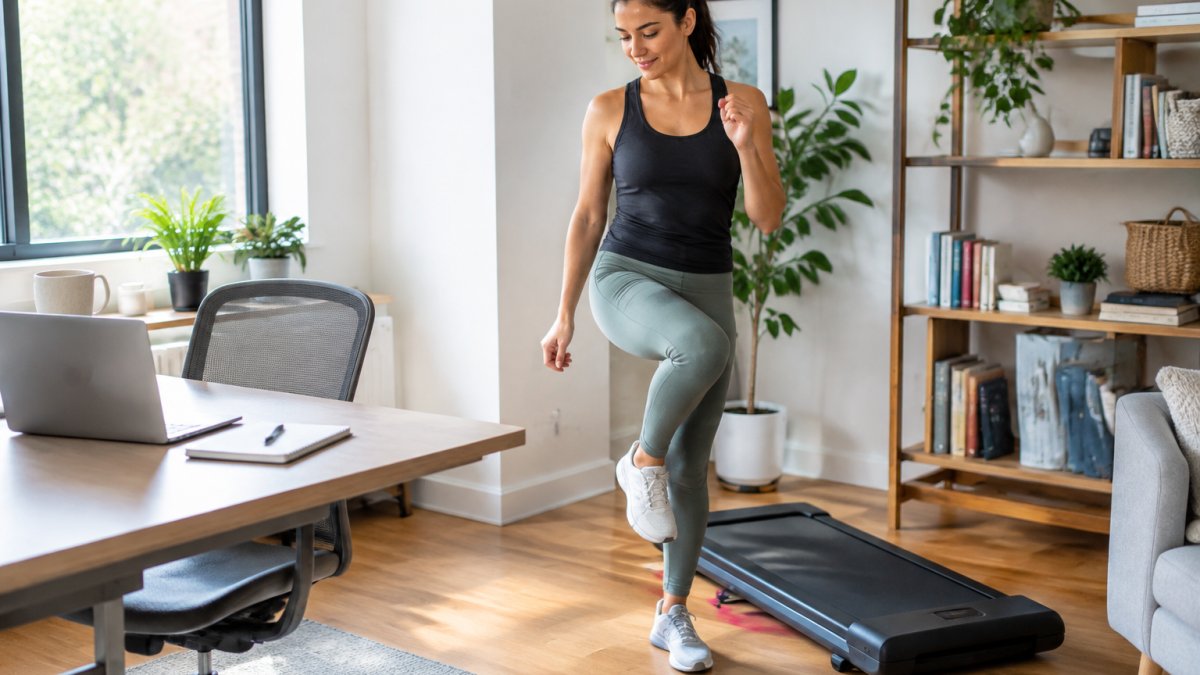
The 10-Minute Reset: Step by Step
- Minutes 1-2: Stand and march in place to warm up.
- Minutes 3-7: Walk briskly or use a walking pad treadmill with incline at an easy pace.
- Minutes 8-9: Add a set of skipping rope turns for a quick cardio burst.
- Minute 10: Slow down, breathe deeply, and stretch your neck and shoulders.
That is it. You will walk into your meeting with a clearer head and steadier nerves.


Calming Exercises for Anxiety That Still Count as Movement
Calming exercises for anxiety count as movement when they lower stress while keeping your body gently active. Gentle yoga, slow stretching, and steady walking can qualify. They may help ease tension without spiking your heart rate.
Try a five-minute flow on a non-slip exercise mat. Move slowly through a few poses, breathing deeply between each one. The goal is emotional balance, not a sweat. Many people find this kind of intentional movement more calming than intense cardio when anxiety is high.

Intensity vs. Duration: Which Matters More for Mental Sharpness?
The honest answer is that it depends on the cognitive task in front of you. Duration tends to win for sustained focus and working memory, while short, hard efforts can sharpen alertness for a brief window, but they also raise the risk of a post-exercise crash. Treat this as a general decision guide rather than a single verdict.
Match the Effort to the Task
- Deep, sustained focus (writing, coding, analysis): favor 20-40 minutes of moderate, steady aerobic movement, brisk walking, easy cycling, or a walking pad at a conversational pace. This is a zone many people find leaves them clearer rather than drained.
- Quick alertness before a meeting or presentation: 5-10 minutes of light-to-moderate movement is usually enough. You want the circulation and mood lift without the fatigue.
- Creative brainstorming: moderate movement, ideally outdoors if possible, tends to support divergent thinking better than an all-out effort.
- Hard intervals (HIIT, sprints, heavy lifting): useful for mood and long-term brain health, but schedule them when you have recovery time afterward, not 15 minutes before deep work.
Why the Trade-Off Exists
Moderate exercise raises heart rate and blood flow without flooding the body with the byproducts of maximal effort. Very intense work recruits more muscle, produces more metabolic stress, and can leave you temporarily fatigued, the opposite of the clear-headed state you were chasing. That is why a 20-minute easy session often beats a 10-minute brutal one for immediate cognitive output, even though both are valuable over time.
A Simple Rule of Thumb
If you have 20 minutes or more, choose moderate duration. If you have under 10 minutes, choose light-to-moderate intensity and skip the all-out finish. A heart rate tracker helps you learn your own pattern: compare how you feel 10 minutes after a long easy walk versus a short hard sprint, and note which one leaves you sharper for the task at hand.
Watch out: stacking a hard workout immediately before a high-stakes focus block is the most common self-inflicted clarity killer, the fatigue often arrives 20-30 minutes later, right when you need to concentrate.
Brain Fog After Exercise: How to Recover and Still Get the Benefits
Post-exercise brain fog is real, common, and usually short-lived, but almost no ranking guide tells you how to bridge the gap between finishing a workout and starting deep work. Post-exercise fog is commonly reported and usually short-lived. The goal is not to avoid it but to manage the transition.
Why It Happens
Three mechanisms drive most post-exercise fog:
- Fluid and electrolyte loss: even mild dehydration dulls attention and reaction time.
- Blood sugar dip: hard or long sessions draw on glycogen, and low blood sugar feels like mental static.
- Sympathetic nervous system arousal: after intense effort, your body stays in a heightened state for a while, which makes calm focus harder to access.
The 10-Minute Cool-Down-to-Deep-Work Protocol
Use the window between exercise and focused work deliberately:
- Minutes 0-2: slow your breathing. Inhale for four counts, exhale for six. This nudges your nervous system out of the aroused state.
- Minutes 2-5: drink water and, if the session was long or hard, eat a small snack combining protein and carbs, for example, yogurt with fruit or a handful of nuts with a few crackers.
- Minutes 5-8: do light mobility or stretching for the areas you worked. This keeps circulation moving without adding fatigue.
- Minutes 8-10: sit quietly, review your task list, and write down the one thing you will do first. The act of naming the task reduces the friction of starting.
When to Skip the Hard Session Before Focus Work
If you have a high-stakes cognitive block, a presentation, an exam, a difficult conversation, schedule hard training for afterward. Save the pre-work window for light-to-moderate movement that lifts alertness without triggering the fog. A calming sleep aid can support the overnight reset if you train in the evening, but the daytime fix is simpler: cool down, hydrate, refuel, and give yourself ten quiet minutes before diving in.
Watch out: caffeine plus a hard workout plus an immediate meeting is a reliable recipe for jittery, unfocused energy, the fog and the stimulant fight each other, and neither wins cleanly.
Build Your Mental Clarity Routine with Calmpulseco
Building a routine is the hard part. Most people know movement helps. Few stick with it long enough to feel the difference.
That is where we come in. Calmpulseco curates the gear that makes daily movement easy to start and easy to keep, including a compact walking pad for indoor cardio. Our selection is intended to support both physical performance and mental stillness.
Start small. Pick one ten-minute session and repeat it daily for a week. Notice how your focus shifts.
The challenge is not knowing what to do. It is making movement a habit that fits a busy day. Calmpulseco is built for exactly that: a curated range of fitness equipment and relaxation tools that help you find your rhythm. Explore the collection, add to cart, and give your mind the reset it has been asking for.
Frequently Asked Questions
Can exercise help with mental clarity?
Yes. Physical activity can increase blood flow to the brain, which may support concentration after a session. A short walk or a few minutes of stepping may help with mental fatigue for some people. The effect is strongest when movement is regular rather than occasional, so build a small daily habit instead of one long weekend workout.
What is the best physical exercise for brain health?
Aerobic activity that raises your heart rate steadily, such as brisk walking, incline walking, or stair stepping, is commonly associated with cognitive function and memory in general research. Strength and resistance work adds a second benefit by supporting circulation and mood. The best choice is the one you will repeat several times a week, so pick a format that fits your schedule and space.
Can a short workout help clear brain fog?
A short workout can help clear brain fog, especially if the fog comes from sitting too long or mental fatigue. Ten to fifteen minutes of moderate movement, such as walking at an incline or using a stepper with resistance bands, may help some people regain focus. If brain fog hits right after a hard session, cool down, drink water, and give yourself 20 to 30 minutes before demanding tasks.
What are some calming exercises for anxiety?
Slow, controlled movement works well for anxiety management. Try gentle resistance band stretches, steady walking at an easy pace, or a few minutes of mindful breathing paired with shoulder and hip mobility. These may help with emotional balance without spiking your heart rate.